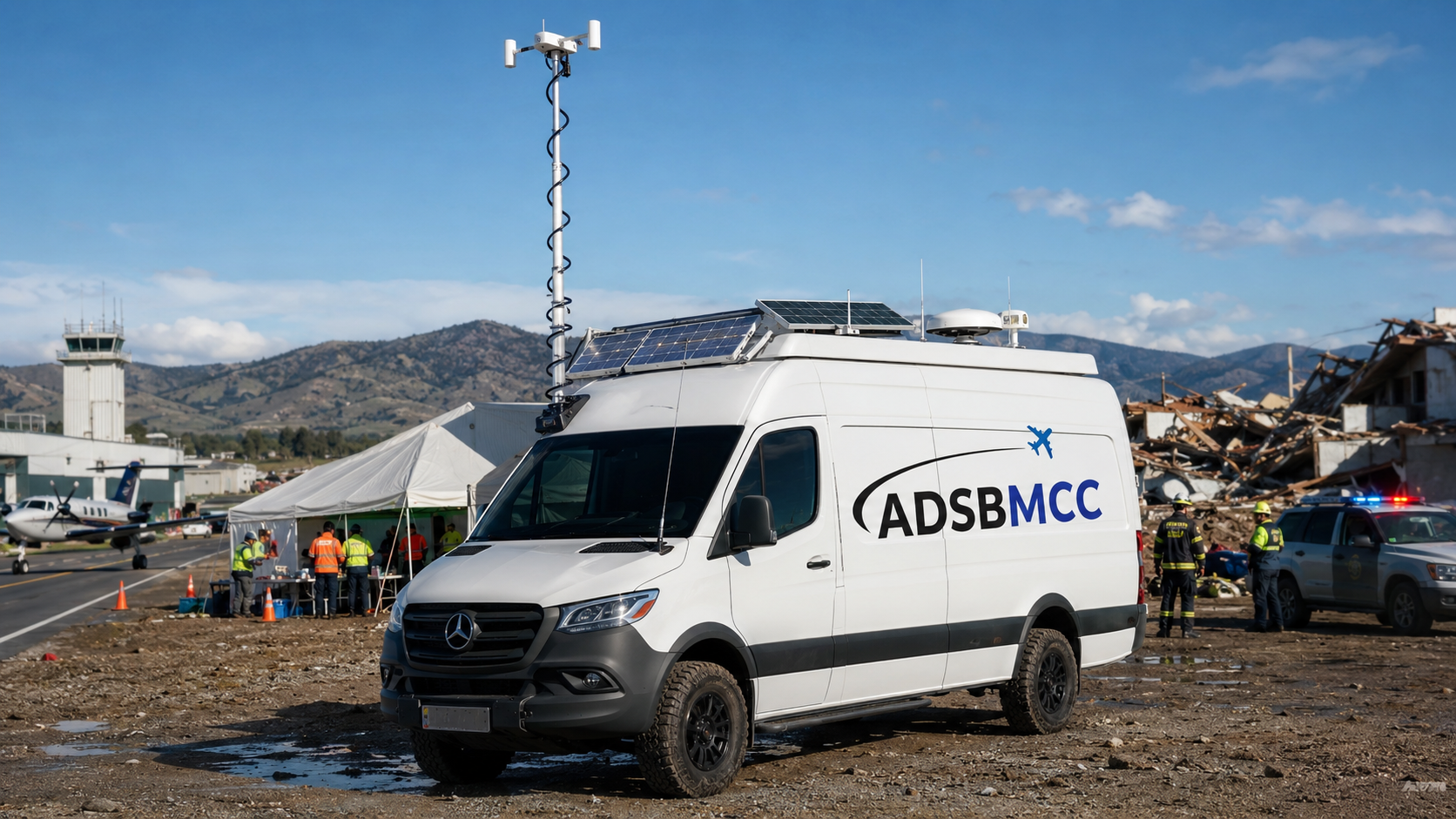
ADSBMCC is a sustainable mobile surveillance concept for disasters, remote airfields, temporary coverage pockets, and command-post continuity.

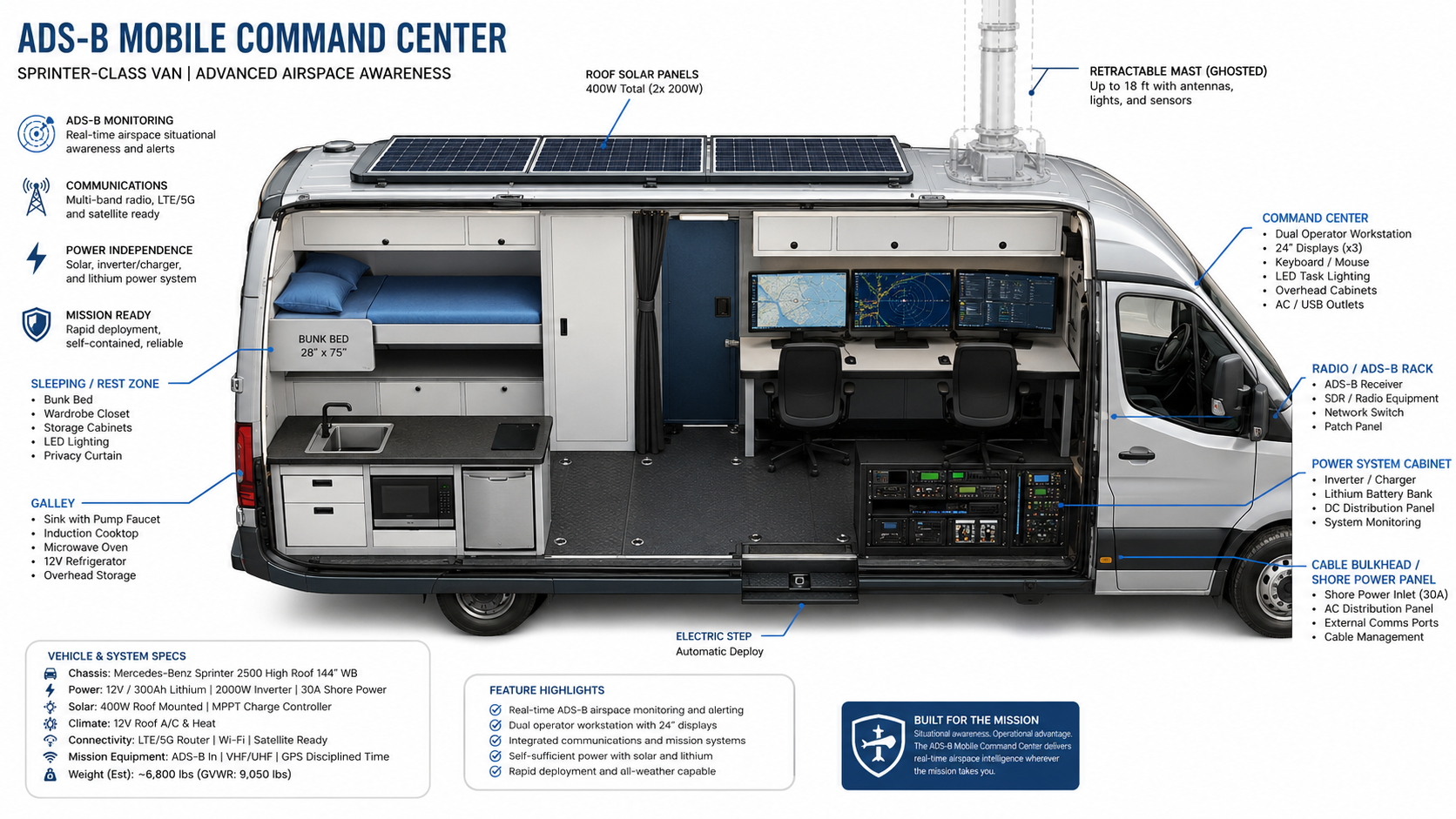
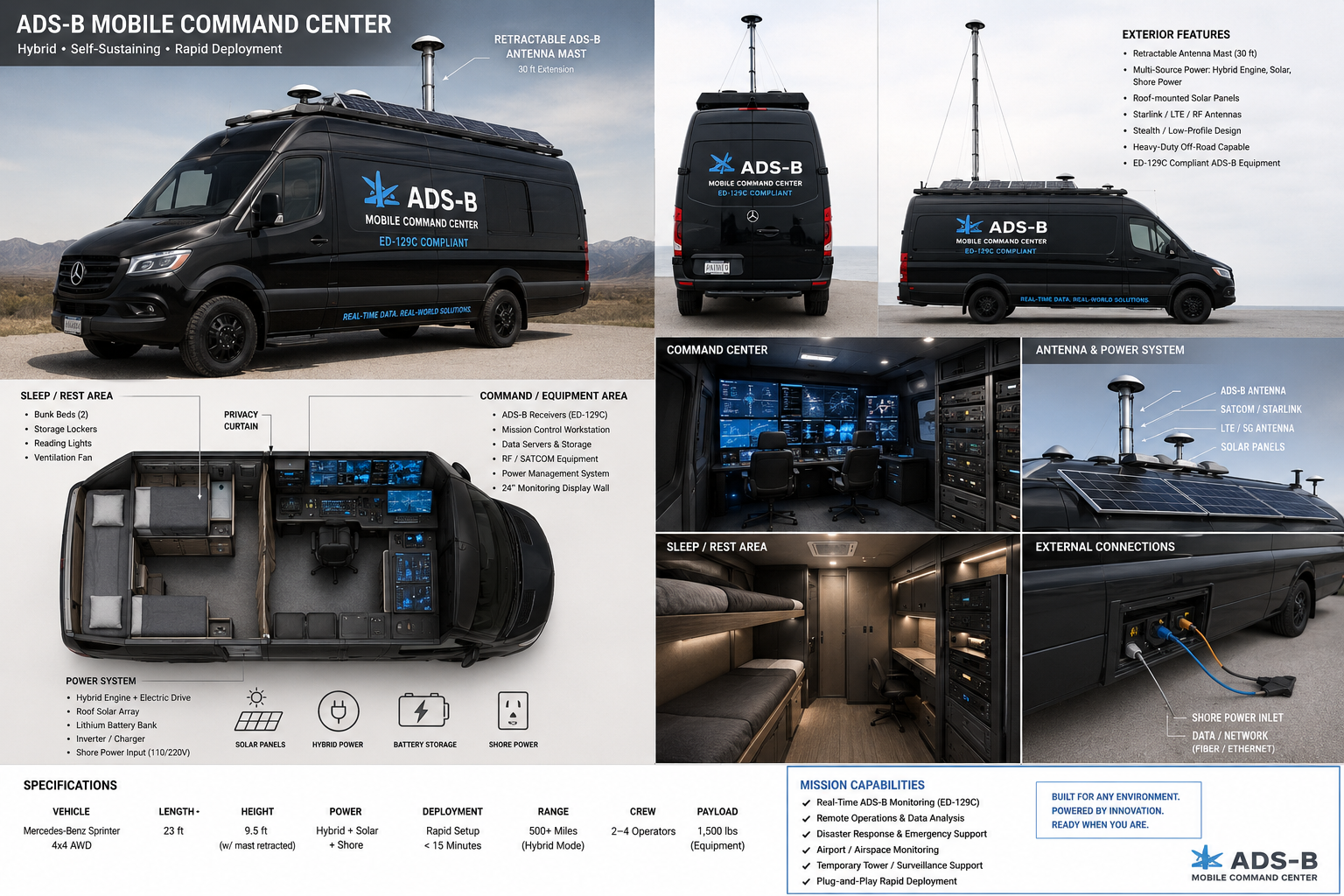
The van concept divides the interior between a sleep/rest zone and a compact equipment bay with dual workstations, radio/ADS-B rack, batteries, inverter/charger, communications backhaul, and a direct cable bulkhead for command-post or building handoff.

ADS-B is line-of-sight. A mobile mast, clean RF path, disciplined timing, rugged power, and secure backhaul can support a localized “cone of surveillance” for situational awareness, testing, redundancy, or emergency operations.
1090 MHz Extended Squitter receiver layer; optional UAT/978 MHz support for U.S.-specific workflows.
Local track processing, health monitoring, logging, and standards-aware feed preparation.
LTE/5G, satellite, VPN, Ethernet, fiber, and direct command-post cable handoff.
Solar, lithium battery, shore power, alternator, hybrid engine, and fuel backup.

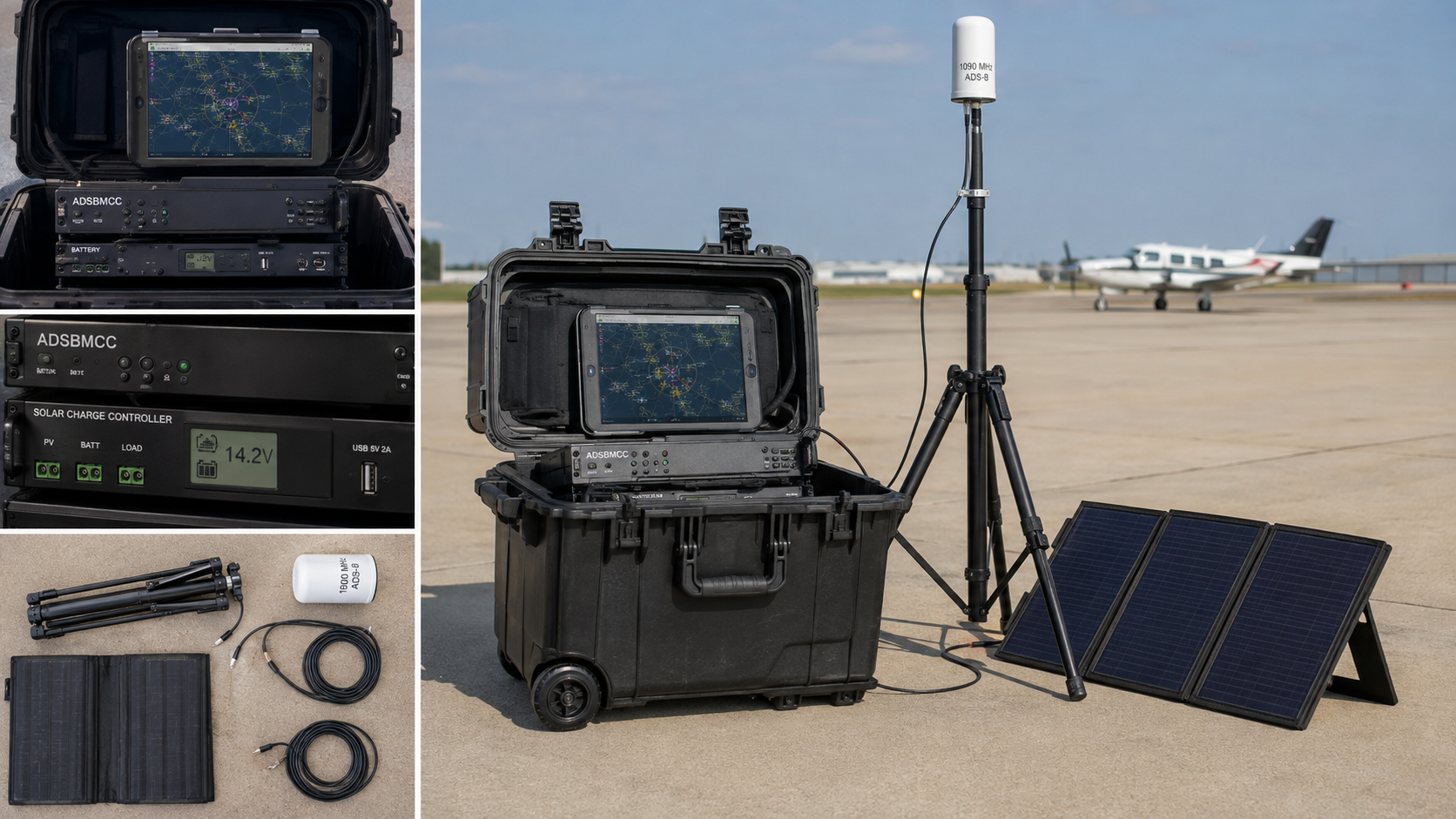
A Pelican-style kit gives ADSBMCC a lower-cost, rental-friendly product: receiver/compute, tablet display, battery, solar controller, foldable panels, tripod mast, antenna, cables, and router.
Set tripod, attach antenna, position panels, and run local cables.
Confirm power, GNSS/time, RF reception, network path, and health logs.
Display locally, export logs, or provide a secure feed to a command post.
The first commercial wedge is disaster and remote-location deployment support. Revenue can expand through van day-rates, standby contracts, Pelican-kit rentals, managed data dashboards, and agency-owned equipment packages.
Operator, van, case, setup, command-post integration, after-action coverage report.
Van, case, mast trailer, and redundant power kits for agencies or contractors.
Hosted dashboards, device health, alerting, retention, software updates, and support.
Finalize architecture, vendors, brand, prototype case, SOPs.
Build van demonstrator, RF testing, coverage model, insurance.
Pilot deployments, client LOIs, authority engagement, secure feed.
Fleet unit #2, QA program, channel partners, managed dashboard.
Position ADSBMCC as temporary surveillance support and situational awareness unless and until the system is formally certified, accepted, and approved by the relevant aviation authority for ATC separation use.

The next step is a build budget, vendor matrix, and field test plan for the van and Pelican-case kit.